


 30 / 228

1. LVL AS A CONSTRUCTIONMATERIAL
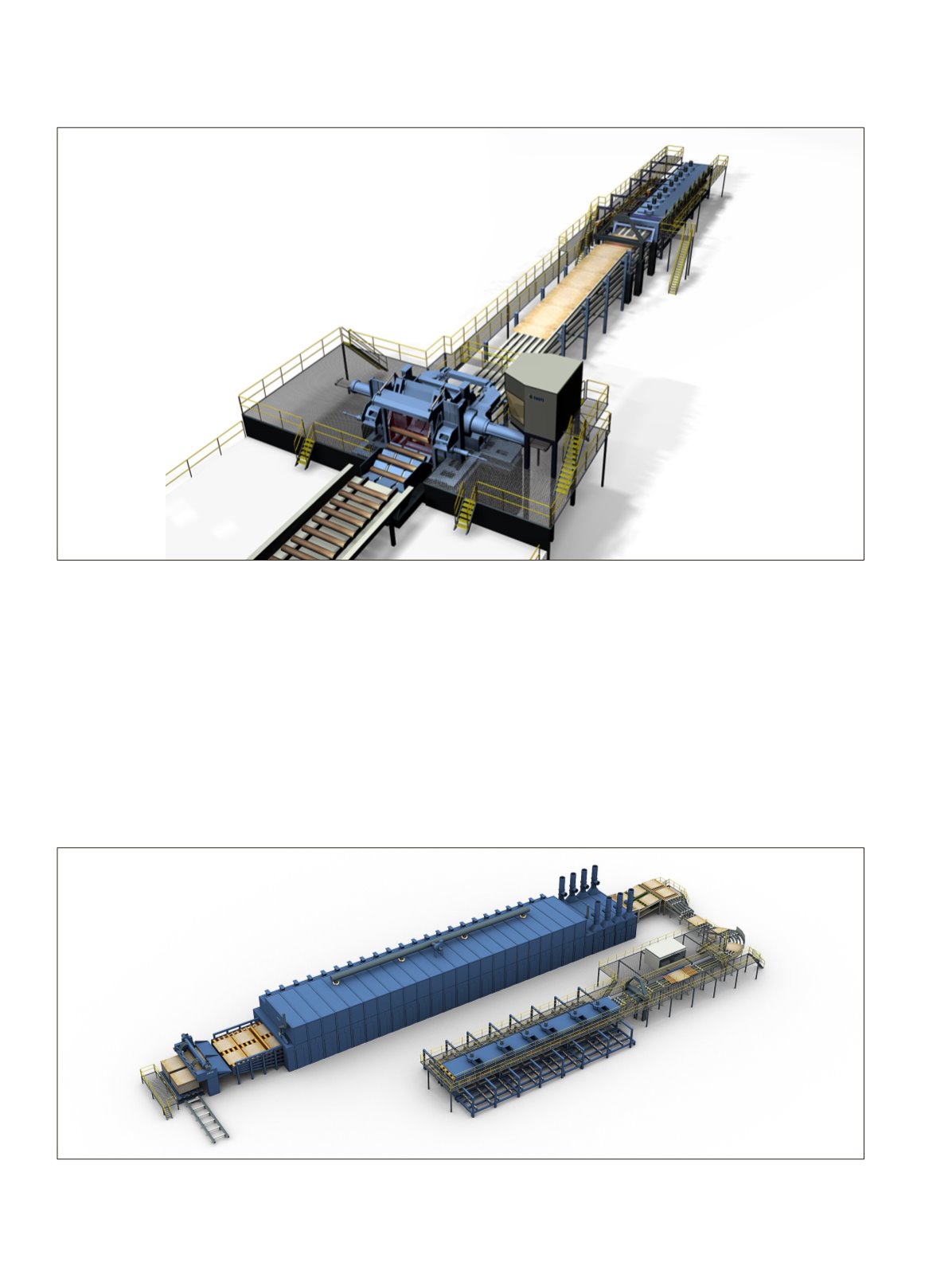
Figure 1.28.
Peeling line, from block centring (left) to veneer mat clipping and stacking (right).
A colour camera technique is used to recognize and ana-
lyse even the smallest details on the veneer mat, such as knots,
holes, splits, bark and rot. Based on this camera analysis, the
system optimizes the points at which the mat is to be cut. The
mat is then clipped into sheets. Defects such as splits, fishtails
and large holes are cut out according to predefined parameters.
The clipped veneers are stacked in different bins according
to their size and moisture content. Softwood is typically sorted
into two or three moisture grades as the moisture content can
Figure1.29.
Drying line.
vary widely, from 30% to over 150%. Sorting of veneers accord-
ing to moisture content enhances the efficiency of drying and
attainment of the desired final moisture content.
1.6.3 Drying and grading the veneer
The aim of the drying process is to dry the green veneers to a
moisture content suitable for gluing. Too high veneer moisture
hampers gluing and generates steam during hot pressing.
28
LVL Handbook Europe