



 32 / 228

1. LVL AS A CONSTRUCTIONMATERIAL
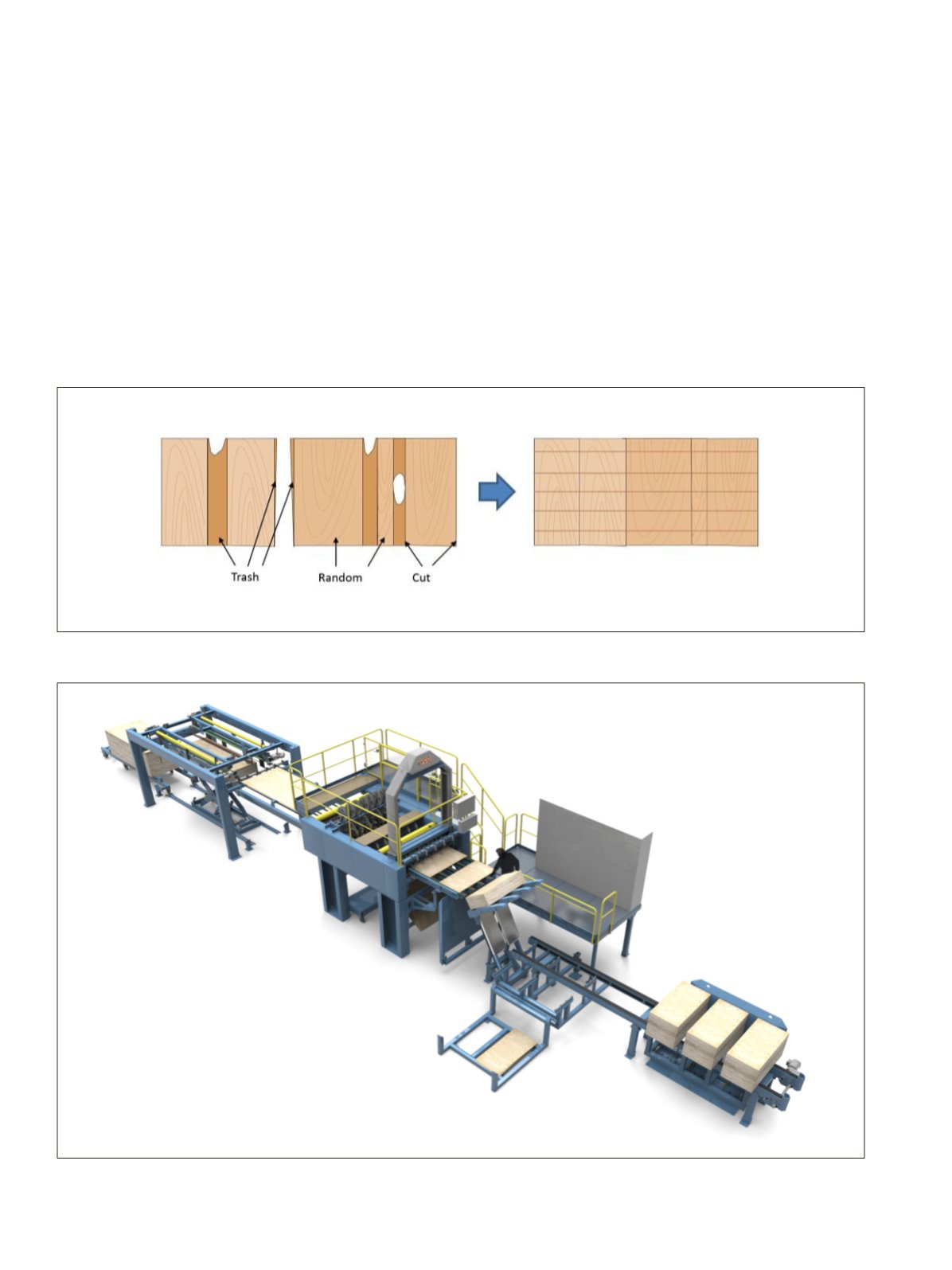
Figure1.35.
Composing principle.
Figure1.36.
Green veneer composing line.
The target moisture content is below 5%. Automatic regulation
maintains the speed, temperature and humidity inside the dry-
er at an optimal level. The energy required to dry the veneer
can be produced from the mill’s own by-products.
A fully automatic machine vision system analyses veneer
defects, such as knots, splits, breakages, micro-splits, decay,
resin pockets and discolouration, at process speed. The image
data is analysed in milliseconds and used to stack the veneers
into different bins at the stacker. The dried veneer is measured
for moisture content to ensure the target moisture has been
achieved. Density measurement and strength grading of the
veneer are also carried out based on radio frequency analysis
and ultrasonic propagation time.
Veneer pieces of different sizes – i.e. ‘randoms’ – can be
composed into veneer sheets of required width. Composed ve-
neers are used as core veneers. The aim is to increase veneer
yield by maximizing the use of peeled material. Randoms can
be collected from peeling line and broken veneers from the
drying line. Veneer can be composed green or dry. At the com-
poser, the randoms are glued or taped together to form full-size
veneer sheets for LVL production.
30
LVL Handbook Europe