


 24 / 228

1. LVL AS A CONSTRUCTIONMATERIAL
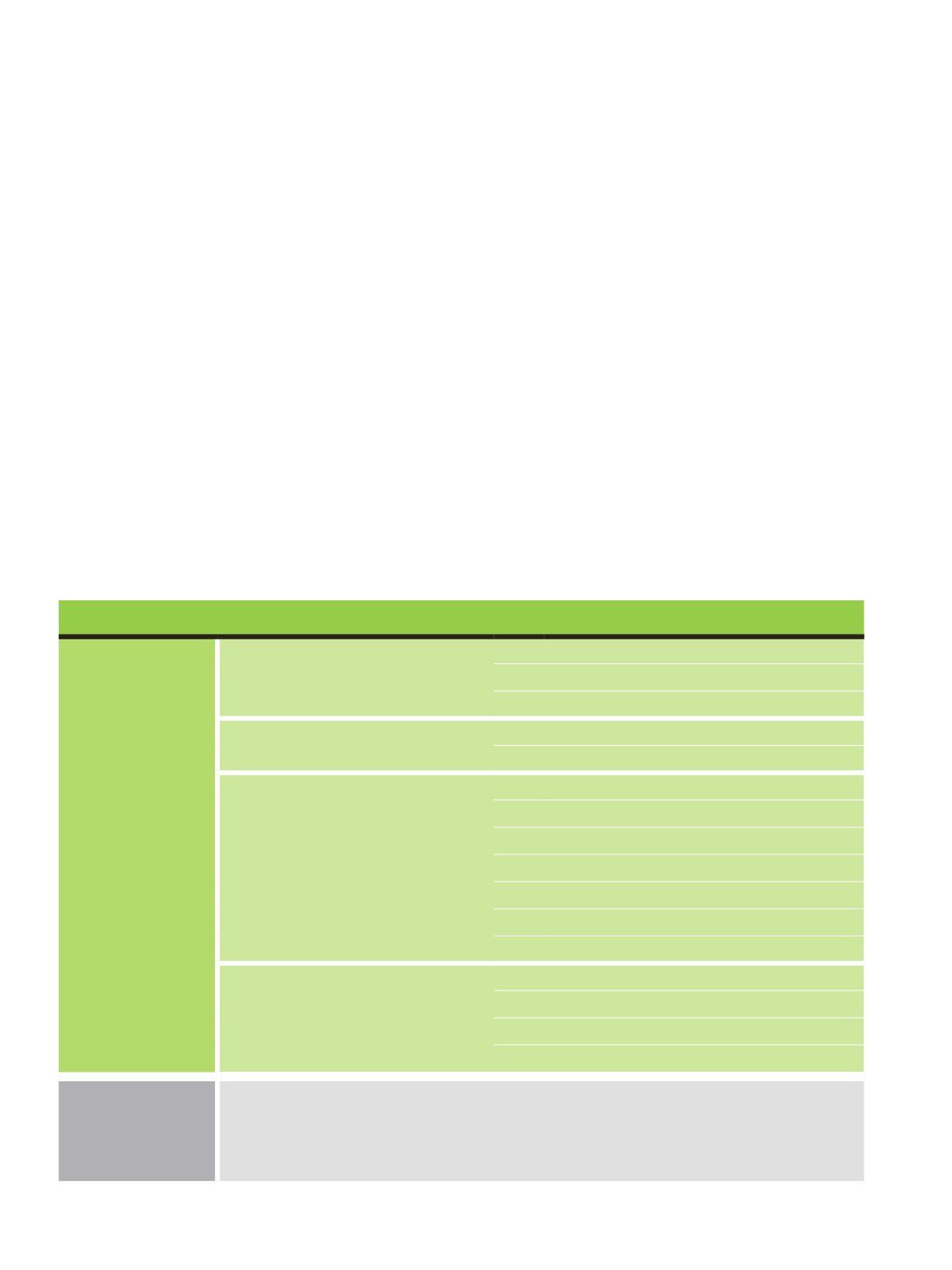
Table 1.4.
Life cycle stages of building environmental assessment based on EN 15978.
LVL 01, Table 1.4.A • muokattu
Life cycle stages
Module
Building
life cycle
information
Product stage
A1
Raw material supply
A2
Transport
A3
Manufacturing
Construction process stage
A4
Transport
A5
Construction installation process
Use stage
B1
Use
B2
Maintenance
B3
Repair
B4
Replacement
B5
Refurbishment
B6
Operational energy use
B7
Operational water use
End of life stage
C1
De-construction, demolition
C2
Transport
C3
Waste processing
C4
Disposal
Additional
information
outside the
system boundary
Potential benefits and loads
D
Reuse, recovery, recycling potential
1.5.2 Sustainable over the life cycle
Wood products offer renewable and sustainable solutions for
construction. Wood as a renewable material has a lower glob-
al warming impact compared to alternative, non-renewable
building materials. The infinite carbon cycle between the at-
mosphere, growing trees and wood products distinguishes re-
newable wood from non-renewable materials.
Life cycle assessment (LCA) is a holistic approach for as-
sessing environmental impacts throughout a product’s or sys-
tem’s life cycle, from extraction of raw materials to disposal of
the product. The principles of LCA have been internationally
agreed and standardized with the ISO 14040 and ISO 14044
standards, which enables third-party verification of life cycle
calculations. LCA compiles and evalua es the inputs, outputs
and potential environmental impacts of a product or system
throughout its life cycle. LCA helps manufacturers to identi-
fy opportunities to improve the environmental and climate
performance of a product and to inform customers and stake-
holders. LCA includes four steps; defining of the goal and
scope, inventory of material and energy flows, assessment of
impacts, and interpretation of results.
Environmental performance of buildings and
building products
The European standard series ‘Sustainability of Construction
Works’ (CEN/TC 350) guides the assessment of the sustaina-
bility of buildings and building products. The standard series
aims to enhance the supply and demand of products and build-
ings that have as low environmental impact as possible. Envi-
ronmental assessment of a building is based on the life cycle
approach, in which each of the different stages of the building’s
life cycle are included and assessed (Figure 1.17).
At the product and service level, the environmental
product declaration (EPD) applies the life cycle assessment
approach and presents quantified environmental information
over a product’s life cycle. EPDs enable comparison between
different products with the same functional purpose at the
building level. In the case of LVL, the comparison is most ap-
propriately done at the structure type level, e.g. structures with
the same load carrying capacity and stiffness. The EN 15804
standard provides product category rules (PCR) for an envi-
ronmental product declaration for any construction product
or construction service (Table 1.4). Biogenic carbon content
22
LVL Handbook Europe