


 113 / 228

3. PURCHASIG, TRANSPORT, HANDLING AND STORAGE OF LVL
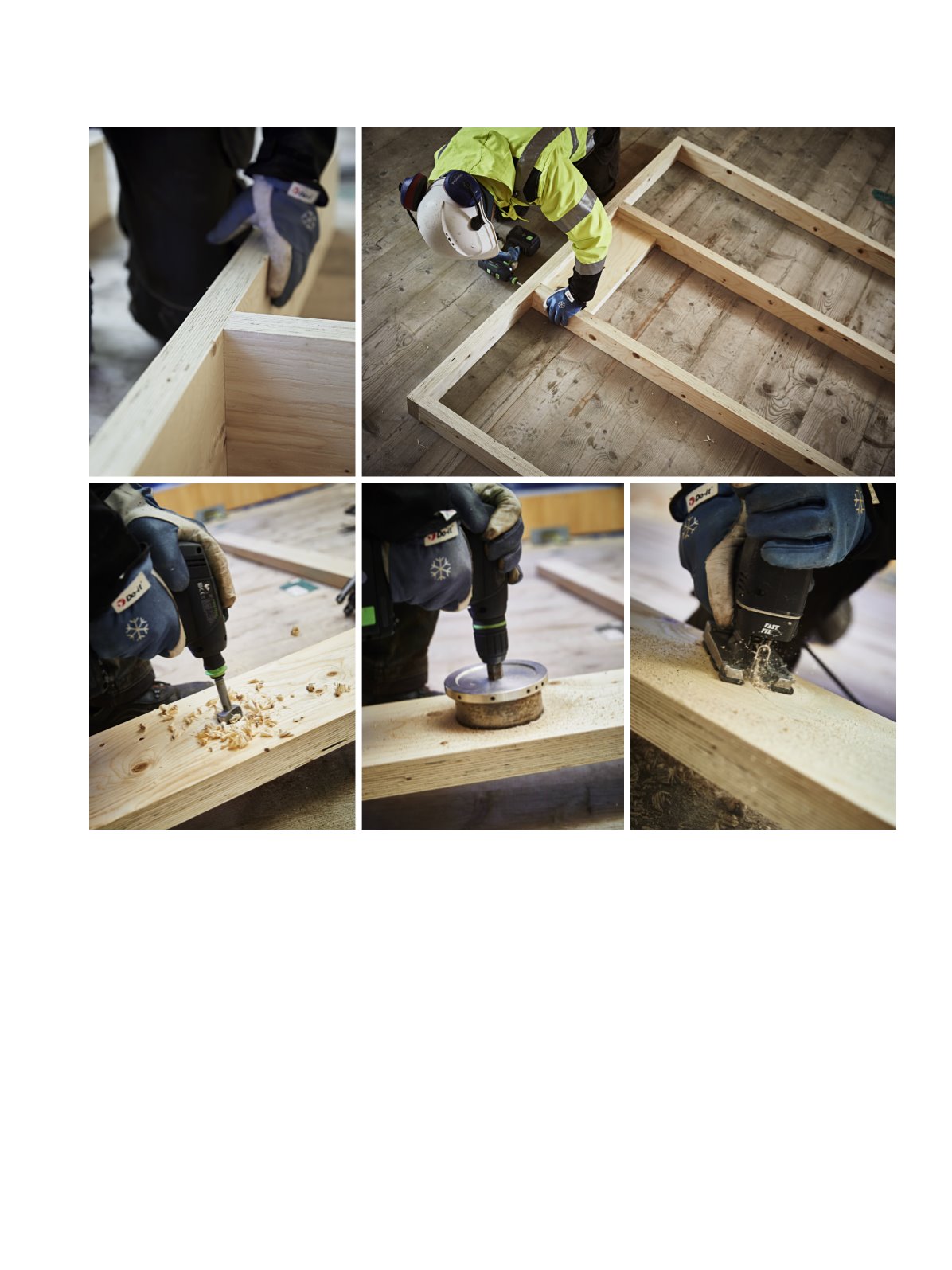
Figure 3.6.
LVL structures can be processed with conventional wood working and power tools.
posure to water without damage or decay, provided that it is
ensured that the products can afterwards dry to the desired
moisture content before the structures are closed. The integrity
of the adhesive bonds is maintained according to the designat-
ed service class throughout the expected life of the structure
28
.
Further information on durability is presented in Chapter 7.
3.4 HANDLING AFTER USE OF LVL
After use, LVL products are to be disposed of according to na-
tional regulations and directives. In general, LVL products can
be reused or recycled as the preferred handling options; alter-
natively, they can be composted or burned for energy recovery.
LVL can be safely burned when the combustion temperature
is at least 850°C; the combustion air and gases are well mixed;
the retention time of the combustion gases in the furnace is
over two seconds; and the residual oxygen content of the flue
gases is over 6%. In these combustion conditions the flue gases
are identical to the gases produced in burning untreated wood.
LVL has a gross heating value of 19.4 MJ/kg
Composting requires the panels to be chipped and the long
composting process should also be taken into consideration.
The products can also be taken to landfill, although LVL de-
grades very slowly
3
.
LVL does not contain anything classified as hazardous waste
and has the following waste code under the consolidated Eu-
ropean Waste Catalogue:
- 17 02 01 Wood (Construction and Demolition Wastes)
Stora Enso
LVL Handbook Europe
111